UNGA 81: The Third World Knocks Again — But Who Is Listening?
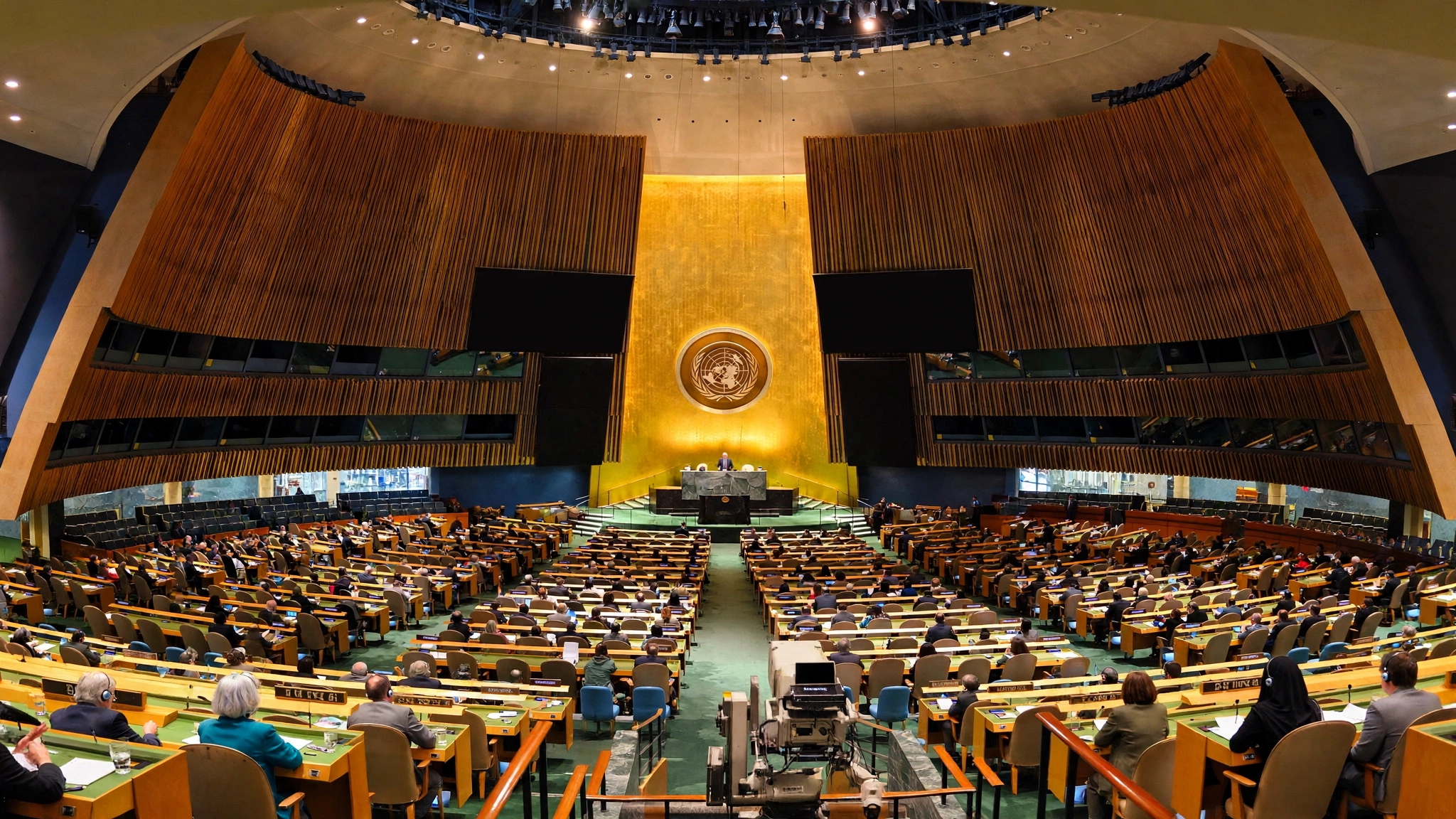
Every September, the world’s most expensive theatre of diplomacy opens its doors in New York. This week it opened for the eighty-first time. Motorcades blocked Manhattan, flags lined First Avenue, and the General Assembly hall filled with the familiar ritual — grand speeches, polite applause, and promises that rarely survive the flight home.
But this year, the man holding the gavel chose an uncomfortable theme. Khalilur Rahman of Bangladesh, President of the 81st session, asked the Assembly to talk about “restoring trust” — and then did something rare in that hall. He told the truth about why trust is gone.
“Trust is not given,” Rahman said. “It is earned.”
He reminded the delegates that Africa — the continent whose soldiers form the backbone of UN peacekeeping missions — has waited eight decades without a single permanent seat on the Security Council. “Africa needs a seat at the table,” he said, “not to be on the menu.”
It was a striking line. It was also an old complaint in new clothing. And that, in one sentence, is the story of the United Nations in 2026.
The numbers that shame the speeches
Rahman put two figures before the Assembly that deserve to be quoted in every capital of the developing world. Global military spending, he said, has approached $3 trillion — eleven consecutive years of growth. In the same period, development assistance fell 23 per cent in a single year, down to roughly $175 billion.
Read those numbers again. For every dollar the rich world spent helping the poor world develop, it spent roughly seventeen dollars preparing for war. And then its leaders flew to New York to lecture the Assembly about “trust.”
I do not question Rahman’s sincerity. A man from Bangladesh — a country that has contributed more peacekeepers than most permanent members of the Security Council — has earned the right to speak plainly. He laid out three paths: honest acknowledgment of institutional failure, deep structural reform rather than cosmetic budget cuts, and opening UN decision-making to scientists, businesses and civil society. All of it was sensible. Almost none of it is new.
The veto: 190 countries, five masters
If Rahman’s speech was the diagnosis, President Erdoğan of Türkiye delivered the prescription — and it was radical. The United Nations, he said, has become unable to fulfil its most basic duty: preserving peace. He described a system “in which the will of more than 190 countries depends on the whims of five countries,” and argued that the abolition of the veto privilege should be “the starting point” of any meaningful reform.
On Gaza, Erdoğan’s words were unsparing. He called the strip “the world’s largest cemetery for children,” where some 1.9 million people have been displaced, many of them multiple times. France’s President Macron, hardly a radical, called the absence of humanitarian corridors “a spectacle that should shame everybody.”
Brazil’s President Lula da Silva added his voice to the same chorus, denouncing the Security Council’s failure to maintain peace — in Gaza and in Ukraine alike — and warning that international institutions are growing incapable of acting in the face of global crises.
So there it is: the leaders of Türkiye, Brazil and France, the President of the General Assembly, and the Secretary-General himself all agree that the Security Council is broken. António Guterres told the Assembly that outdated institutions are no longer equipped for current geopolitical realities and called for comprehensive Council reform, built on what he termed “networked multipolarity” rather than raw confrontation.
Everyone agrees. Nothing changes. The veto survives every funeral oration delivered over it.
Power speaks; law listens
And then, from the very same podium, came the reminder of why. President Donald Trump used his address to declare that the war with Iran had prevented Tehran from obtaining a nuclear weapon — and warned that he could “annihilate the Islamic Republic” if no deal is reached, urging other nations to help isolate Iran economically.
Set aside, for a moment, one’s view of Iran. Consider what it means that the leader of the world’s most powerful country can stand in the temple of international law and issue a threat of annihilation, in the same week others plead for the Charter to be respected. This is not a malfunction of the system. This is the system. The United Nations was designed so that great powers would never be bound against their will — and eighty-one years later, it still functions exactly as designed.
That is the point I made in an earlier column on this website: that the United Nations, whatever its founding ideals, has become an instrument through which the powerful manage — and dominate — the Third World. Everything I heard from New York this week confirmed it. The speeches change. The seating arrangement does not.
The question nobody answered
There was one more telling moment. More than twenty countries called during high-level week for a new global body to oversee artificial intelligence, insisting it must remain under human control and in line with international law. The Secretary-General named “runaway AI” among the existential threats of our time. Even Sam Altman of OpenAI was summoned to brief the Security Council.
Here is a technology that will reshape every economy on earth, and the developing world is — once again — arriving at a table where the rules are being written by others. The same film, a new projector.
So I return to President Rahman’s theme: restoring trust. Trust in what, exactly? In an institution where five countries can veto the conscience of 190? Where $3 trillion buys weapons while $175 billion — shrinking — is spared for development? Where the same podium hosts both the plea for international law and the threat to annihilate a nation?
The Third World does not need another lecture on multilateralism. It needs a United Nations that cannot be switched off by a single veto. Until that changes, every September will bring the same theatre: fine words in New York, and the same old hierarchy everywhere else.
The knock on the door will continue. The question is whether anyone inside is obliged to answer.
Sources & References
- UN News — “Time to accept ‘hard truths’ so trust can be rebuilt: General Assembly President” (22 Sept 2026)
- Wikipedia — “General debate of the eighty-first session of the United Nations General Assembly”
- AnewZ — “UNGA: Key highlights on 23 September 2026”
- Stimson Center — “9 Issues to Watch at UNGA 81”
- JOSSYN Blog — “Erdogan at UNGA: ‘Gaza Has Become the World’s Largest Cemetery for Children'” (23 Sept 2026)

Post Comment